On Wednesday, 27 August, Latvian Minister of Justice Inese Lībiņa-Egnere met in Tartu with Estonian Minister of Justice and Digital Technologies Liisa-Ly Pakosta. During the meeting, the ministers agreed to seek joint Baltic and European-level solutions to the issue of debtors hiding maintenance assets, and to continue discussions in Riga on digitalisation and the use of artificial intelligence in the court system, involving both academia and the business sector.
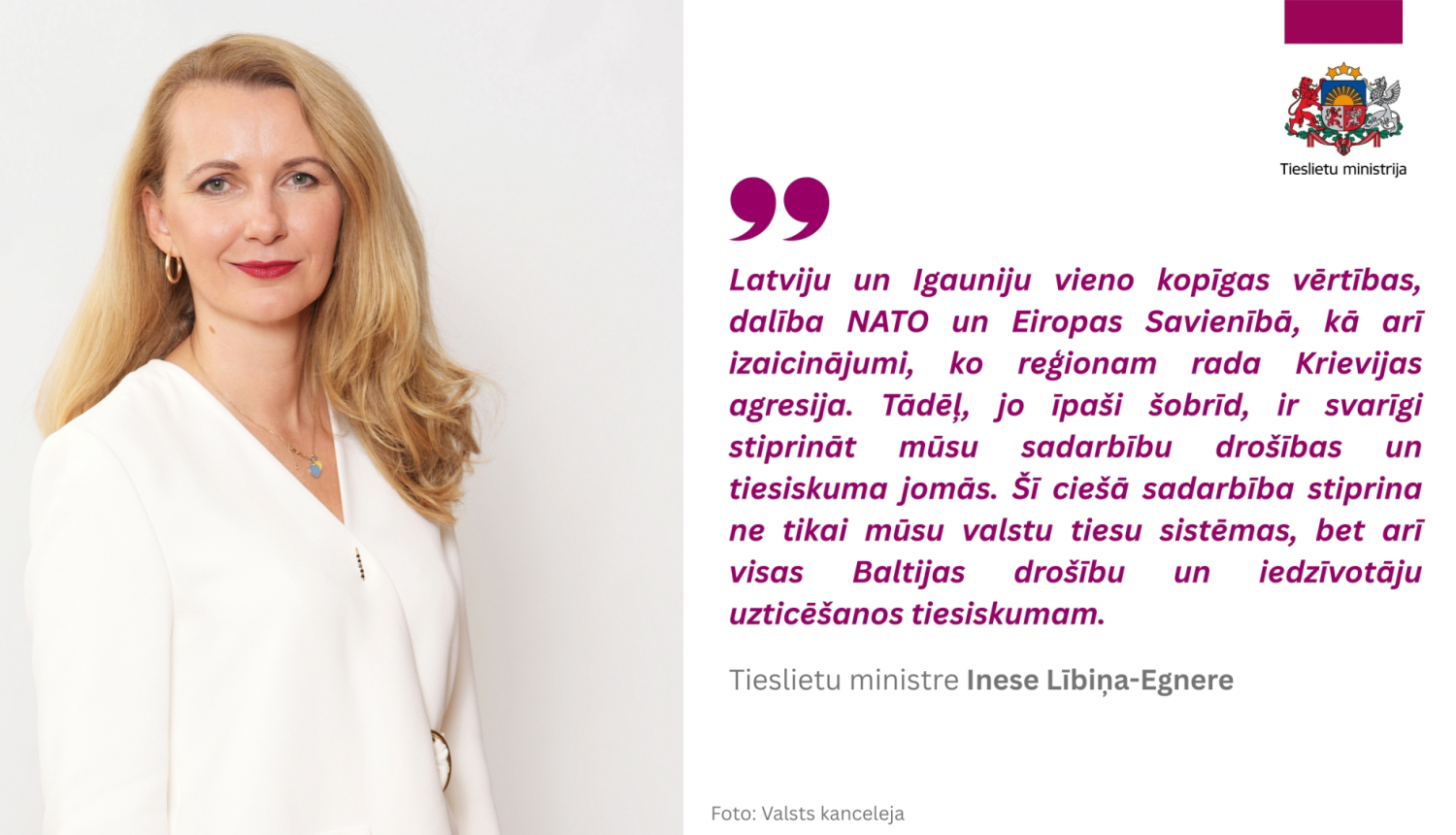
Minister of Justice Inese Lībiņa-Egnere explained: “Latvia and Estonia share common values, membership in NATO and the European Union, as well as challenges arising in the region from Russian aggression. Therefore, especially at this time, it is important to strengthen our cooperation in the areas of security and the rule of law. This close collaboration strengthens not only our national court systems but also the security of the entire Baltic region and public trust in the rule of law.”
Both sides noted that debtors, including those responsible for maintenance payments, often hide assets in other countries to avoid repaying debts. The current procedure, which relies on requesting information directly from the debtor, is not sufficiently effective. As a solution, the ministers discussed the possibility of agreeing at the Baltic and European level on a mechanism that would allow court bailiffs to request information on a debtor’s property or income from their counterparts in another country.
An important topic of discussion was also cooperation on court digitalisation and the introduction of artificial intelligence tools. Latvia continues to implement the e-cases system and decision anonymisation, while Estonia already uses AI tools in courts. The ministers agreed to continue discussions on this topic in Riga, involving academia and businesses. Both countries are already regarded as leaders in Europe in this field.
The meeting also addressed the resilience of the court system in emergencies. Latvia shared its experience with the Martial Law framework, while Estonia provided practical examples, including court evacuation procedures, resource preservation and inter-institutional cooperation.
Further development of the victim support system was also discussed. Latvia, together with the Ministry of Welfare and Baltic partners, is developing a unified system concept, with Estonia’s experience recognised as an important reference point.
The Tartu meeting reaffirmed the close cooperation between Latvia and Estonia in justice matters, covering everyday work in notaries and court expertise, as well as joint digitalisation and resocialisation projects. The visit took place within the framework of the second joint session of the Latvian and Estonian governments, attended by the Prime Minister and members of the Cabinet.