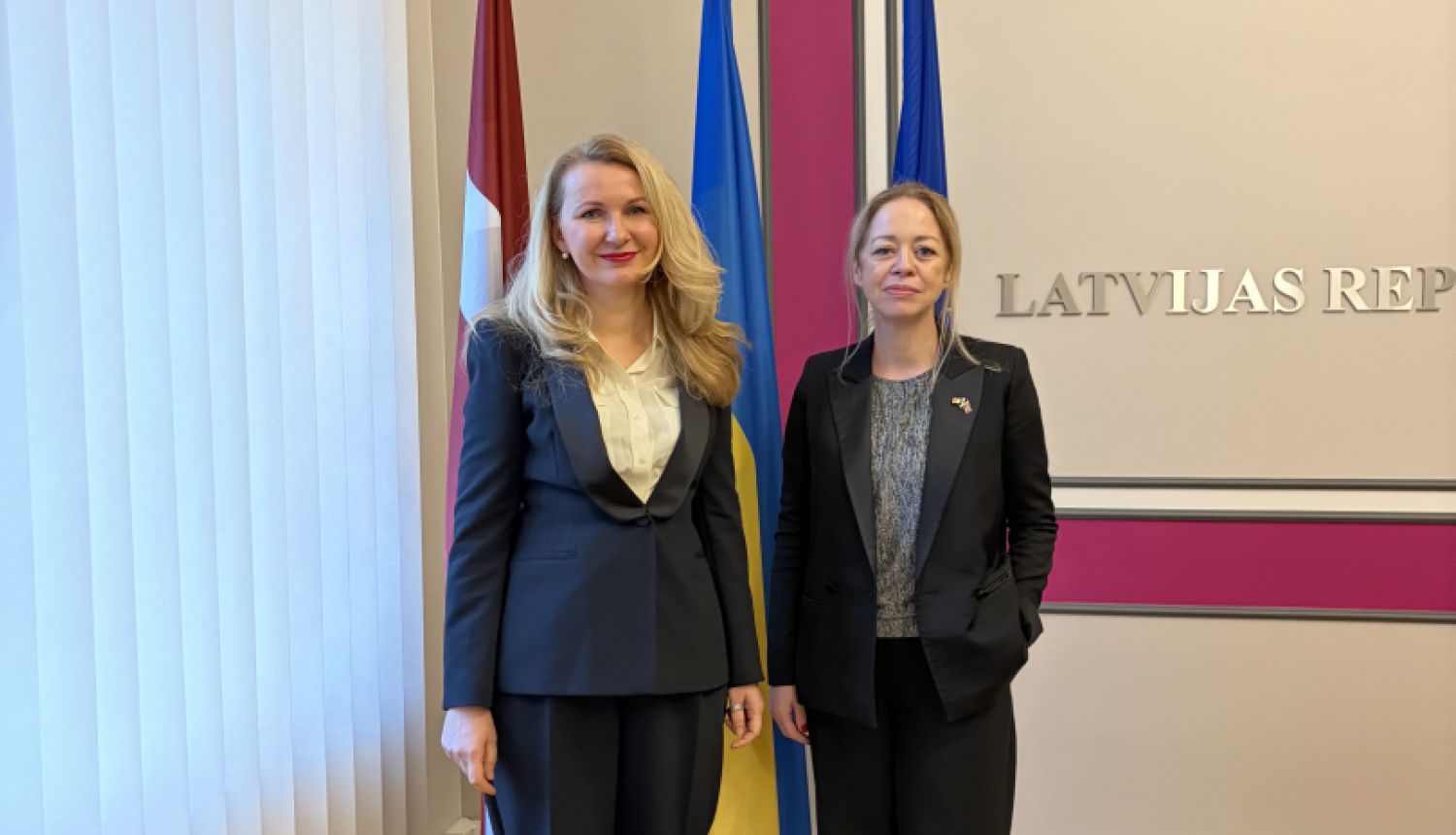
On 17th December, Justice Minister Inese Lībiņa-Egnere met with Ireland’s Ambassador to Latvia, Marcella Smyth, during an introductory visit to discuss bilateral cooperation in the field of justice, as well as current European Union and Council of Europe policy issues.
The discussion focused on cooperation in the context of Ireland’s upcoming presidency of the Council of the European Union in the second half of 2026 and Latvia’s preparations for its presidency in 2028, emphasizing the importance of experience sharing in EU-level policymaking. Ireland has announced that migration will be one of its presidency priorities.
Special attention was given to migration policy. The justice minister highlighted Latvia’s support for the European Commission’s proposal for a directive establishing minimum rules to prevent and combat facilitation of unauthorized entry, transit, and residence. “It is essential to ensure a balance between protecting individual fundamental rights and the ability of states to guarantee public safety, the integrity of national borders, and national security. At the same time, discussions at the Council of Europe level must continue on the challenges posed by migration in the application of the European Convention on Human Rights,” Minister Lībiņa-Egnere stressed.
The minister also reported that on 10 December she participated in an informal meeting of Council of Europe justice ministers, where Latvia, together with Ireland and 27 other countries, supported a balanced approach in the European Convention on Human Rights system, reconciling individual rights protection with public security. In this context, Latvia considers the instrumentalization of migration a particularly important issue.
Other EU priorities were discussed, including work on legal frameworks for protecting vulnerable adults in cross-border situations and strengthening child and youth participation. Latvia welcomed progress on the draft regulation and emphasized the need to continue work to reach final agreement during Ireland’s presidency.
The meeting also addressed implementation of the Council of Europe Convention on preventing and combating violence against women and domestic violence, including the Venice Commission’s opinion on Latvia. Risks of disinformation and additional challenges related to migration were also discussed.
Close cooperation between the law enforcement agencies of both countries in combating human trafficking was highlighted, with particular attention to employment-related risks.
The parties agreed to develop experience-sharing on the misuse of migration, including inappropriate use of student and work visas from third countries and related exploitative practices by companies. They expressed readiness to strengthen cooperation at the level of the Justice Academy, drawing on Ireland’s experience, with a focus on preventing violence.
At the conclusion of the meeting, the justice minister thanked Ireland for its close cooperation and expressed readiness to continue regular dialogue at both bilateral and EU and Council of Europe levels.
Cooperation with Ireland is particularly important to Latvia due to strong people-to-people ties. Ireland hosts the fifth-largest Latvian diaspora, with approximately 24,000 Latvian citizens. In 2025, under mutual legal assistance, there were two requests each in civil and criminal cases with Ireland, and six requests in total in child-related cases. Cooperation in maintenance cases is implemented in accordance with EU regulations and is considered successful, with 248 active cross-border cases and effective communication between the competent authorities.