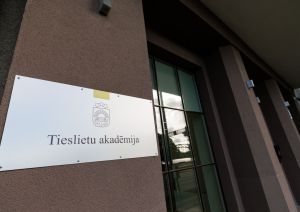


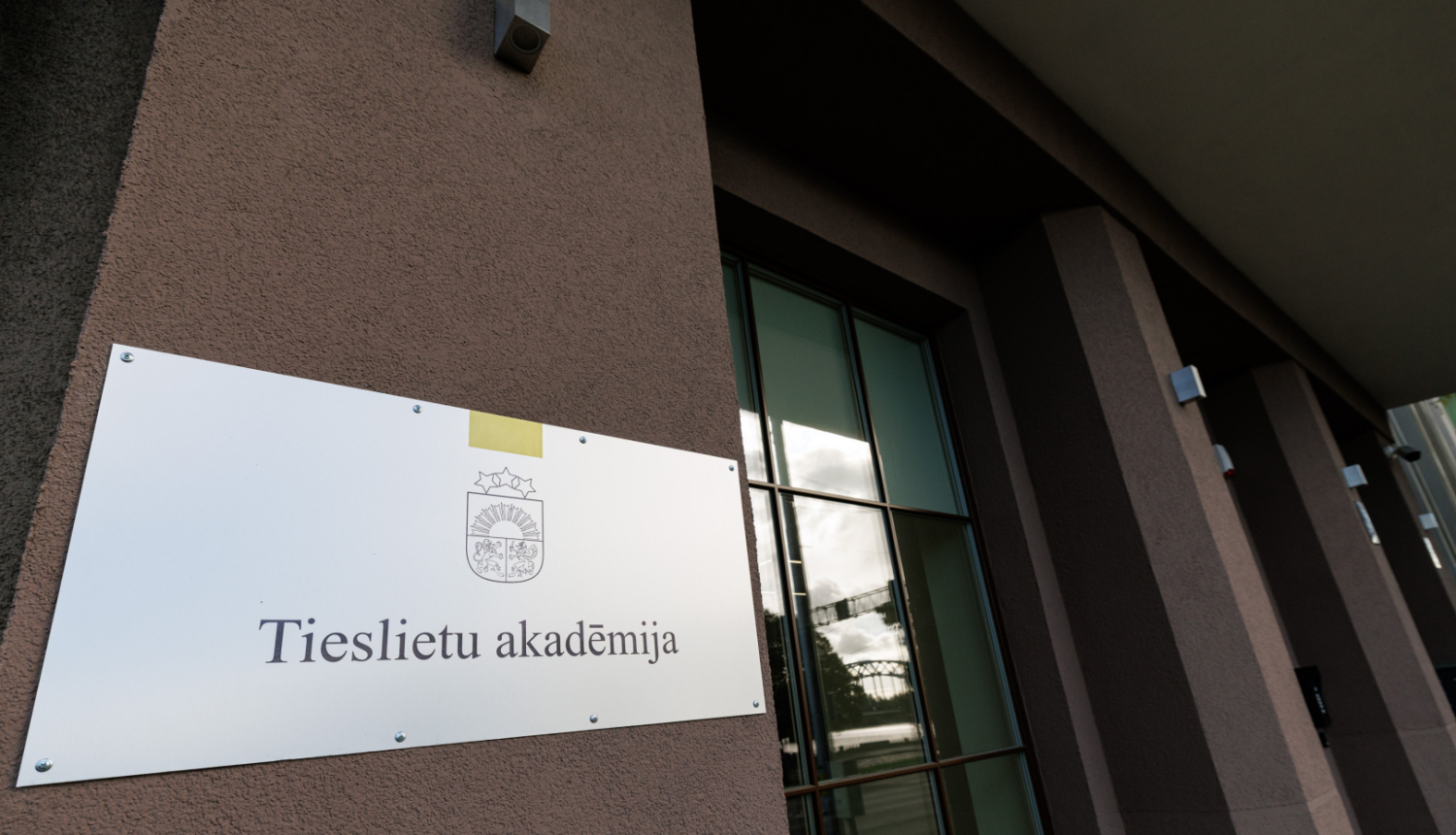
Today, October 17, the Justice Academy officially opened its premises, established with funding from the European Union Recovery Fund. The new institution will serve as a long-term platform for the training of judges, prosecutors, and other justice sector professionals, strengthening the quality and efficiency of the judicial system as well as public trust in it. The Justice Academy represents a new milestone in the development of Latvia’s justice system.
The Academy is a place where knowledge, experience, and innovation in the justice sector converge, providing a unified learning environment for judges, court staff, prosecutors, their assistants, and investigators. It is located at 11. novembra krastmala 31, Riga. The Academy is not merely an educational center; it is a platform for continuous professional development, aimed at cultivating strong and competent courts and law enforcement institutions.
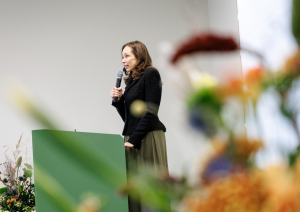
At the opening, Minister of Justice Inese Lībiņa-Egnere emphasized: “The Justice Academy is a crucial long-term investment in strengthening Latvia’s rule of law and security, especially in today’s complex geopolitical environment. The benefits of the Academy’s work extend to the entire Latvian society. The Academy implements significant programs to address pressing challenges in the judicial system in a comprehensive and interdisciplinary manner – including enhancing knowledge of hybrid threats, serious economic crimes, and cases involving victims of violence. The Academy ensures that judges, prosecutors, court staff, and investigators learn in a unified, systematic, and continuous way. This results in a more consistent understanding and application of laws, higher-quality decisions and judgments, and faster, fairer justice for Latvian residents.”
Since January 1, 2025, when the Justice Academy began its operations, it has been providing training both at the start of professional duties and for the continuous development of knowledge, skills, and competencies. Courses are taught by top Latvian lawyers and foreign lecturers – highly skilled professionals in their fields. The Academy supports personal growth, fosters international cooperation, and conducts research to enhance judicial efficiency.
Director of the Justice Academy, Laila Jurcēna, noted: “In today’s world, where those who seek to undermine the rule of law often exploit the very mechanisms the law provides, the judiciary plays a critical role in safeguarding justice. To perform this role effectively, judicial professionals need legal competence, a broad perspective beyond the legal field, as well as courage, independence, and responsibility.”
Special attention in the Academy’s training and research will be devoted to complex legal issues, including hybrid threats from Russia, reducing violence, ensuring a lawful business and financial environment, and artificial intelligence development. The Academy also prioritizes cultivating a learning culture as an integral part of the judiciary focused on growth and development.
“Responsibility for fulfilling professional duties, for the effective functioning of the judicial system and prosecution, for upholding and protecting legal values, maintaining the balance of powers, and shaping the legal space for national development, public welfare, and dignified coexistence of every individual. It is important to see how our joint efforts in establishing the Justice Academy will reflect in resolved disputes and resonate within the legal environment,” L. Jurcēna continued.
The Justice Council oversees the Academy’s functional implementation. At the opening, its chairman Aigars Strupišs highlighted:
“The establishment of the Justice Academy is a strong example of what can be achieved through constructive dialogue and cooperation between branches of state power for the benefit of society’s future.”
The event also included an interdisciplinary panel discussion, “What Professional Judiciary Do We Want in the 21st Century?”, featuring representatives of the judiciary and experts from various fields, outlining the profile of a future guardian of justice. The discussion was moderated by Prof. Dr. iur. Sanita Osipova.
The Justice Academy is one of the most significant outcomes of the European Union Recovery and Resilience Mechanism project “Justice Academy” and has been positively recognized by the Head of the European Commission Representation in Latvia, Andris Kužnieks: “The European Commission’s annual rule of law report praises the efficiency of the Latvian justice system and highlights the establishment of the Justice Academy as a major achievement. With Recovery Fund support, a modern center has been created to ensure the professional development of judges, prosecutors, and court staff. The Academy is not just a building or a project – it is an investment in the quality, reliability, and effectiveness of Latvia’s rule of law, and thus in society itself. Particularly commendable is Latvia’s commitment to ensure the long-term impact of this investment, with state funding continuing the Academy’s work beyond the project’s conclusion in 2026. The Academy will help foster a learning culture as an integral part of the judiciary – a key prerequisite for the development of a democratic and just state.”
The opening event was organized by the Court Administration within the framework of the project (No. 6.2.1.3.i0/1/22/I/TM/001) “Justice Academy.”